



Would you like to get detailed information? Contact us!
You can reach our support line 24/7. Our team will get back to you as soon as possible.Our clinics offer a comprehensive range of services to meet all your healthcare needs. You can consult our experienced team to get information about your treatments.
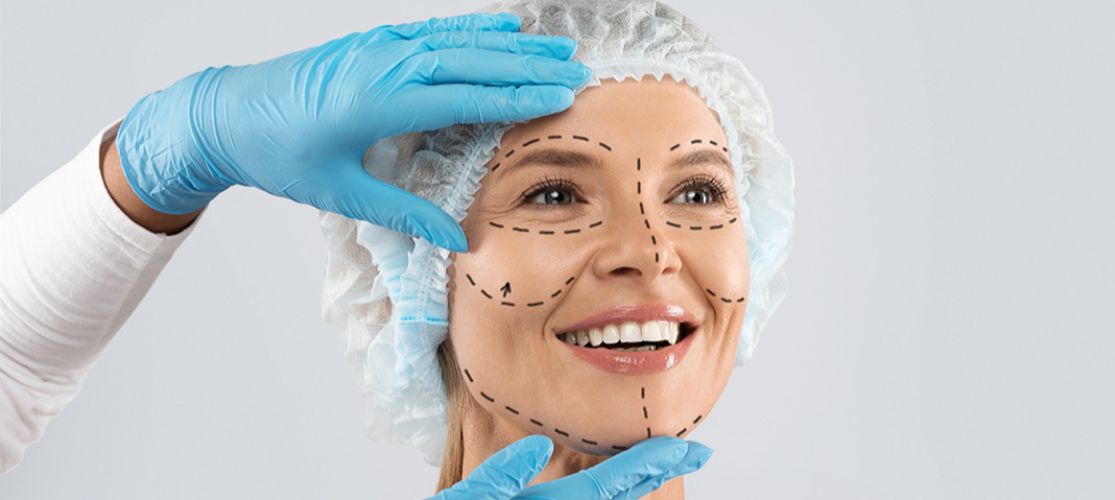
Facelifting, also known as a facelift or rhytidectomy, is a cosmetic surgical procedure aimed at reducing visible signs of aging in the face and neck. This procedure involves tightening and lifting the underlying muscles, removing excess skin, and repositioning fat to create a more youthful and refreshed appearance. Facelifting can address issues such as sagging skin, deep creases, and jowls, providing long-lasting results that enhance the overall facial contour.
Face lifts in Turkey have become increasingly popular due to the high-quality medical care and affordable prices offered by the country’s clinics. Turkey boasts skilled and experienced plastic surgeons, many of whom have been trained internationally.
The procedure, known as rhytidectomy, is performed in modern, state-of-the-art facilities, often in Antalya.
Patients can expect comprehensive care, including consultations, surgery, and post-operative support, often coupled with the opportunity to recover in a beautiful and culturally rich environment. Our clinics also provide packages that include accommodation, transportation, and translation services, making the process smoother for international patients.
Face lift surgery, which is the surgical procedure preferred by people who want to deal with the signs of aging, is performed in a sterile environment by expert plastic surgeons using local or general anesthesia. The surgeon makes an incision starting from the front of the hairline and extending behind the hairline. With the incision, excess skin tissues are removed and the fatty tissue is reshaped. In this way, the skin tightens, wrinkles are eliminated, the face is reshaped and facial lines become clear.
Face lift surgery is one of the surgical procedures used by individuals who are not satisfied with sagging and wrinkles on their skin. Facelift surgery, like other types of surgery, has a procedure that must proceed in a certain order. The basic steps of the facelift surgery process are: Before the patient is taken into surgery, issues such as general health status, skin type and medical history are evaluated by the specialist surgeon.
Depending on the procedure to be performed and the patient's health condition, local or general anesthesia is selected by the surgeon and applied to the patient. The surgeon makes an incision starting from the front of the hairline and extending behind the ear and behind the hairline. This process is used to tighten the skin.
Excess skin tissue is removed and the tissues under the skin are rearranged. Thus, sagging areas are corrected. Facial lines are clarified by reshaping the fatty tissue in the skin. When the procedures are completed, the surgeon stitches the incisions using fine stitches. He pays attention to aesthetic procedures to ensure that the seams leave minimal scars. The patient then begins the recovery process, and a patient-specific recovery plan is prepared and performed.
 7 days
 Transfer Services
 Accommodation Options
 Nurse / Assistant Support
 1 Year Follow Up
Treatments are planned individually. You need to share information about your treatment with us so that we can provide you with correct planning. In particular, your photographs, x-rays, tests and previous health information are necessary for us to help you. After your information reaches us, your health consultant will contact you as soon as possible.
Face lift is a surgical procedure performed to reduce skin sagging in the face and neck area, tighten the skin and provide rejuvenation. This procedure is usually performed by repositioning the skin and underlying tissues on the face.
Face lift procedure is usually performed under general anaesthesia. The surgeon makes skin incisions to remove excess skin from the face and neck area, tightens and repositions the underlying tissues. In some cases, fat transfer or fillers may also be used.
Healthy adults who experience sagging, wrinkles or laxity in the face and neck area may be suitable candidates for a face lift procedure. However, whether it is suitable for each patient is determined as a result of a surgical evaluation.
The recovery process varies from person to person but can usually take several weeks. In the first days after the procedure, there may be swelling, bruising and mild pain. Bandages and stitches are removed within a few days. You should rest as recommended by your doctor, limit physical activities, and avoid heavy lifting for a certain period of time.
After the facelift procedure, the skin in the face and neck area can gain a younger, tighter, and fresher appearance. Sagging and loose tissues tighten, and the skin can take a smoother shape.
Facelift can often be performed together with other aesthetic procedures such as eyelid aesthetics (blepharoplasty), forehead lift or neck lift. When these procedures are performed together, a more comprehensive facial rejuvenation can be achieved.
As with every surgical procedure, facelift has certain risks. These may include infection, bleeding, anaesthesia-related reactions, stitch problems or undesirable aesthetic results. For this reason, you should consider the recommendations of the specialist surgeon who will perform the procedure and do not neglect regular check-ups.