


Would you like to get detailed information? Contact us!
You can reach our support line 24/7. Our team will get back to you as soon as possible.Our clinics offer a comprehensive range of services to meet all your healthcare needs. You can consult our experienced team to get information about your treatments.
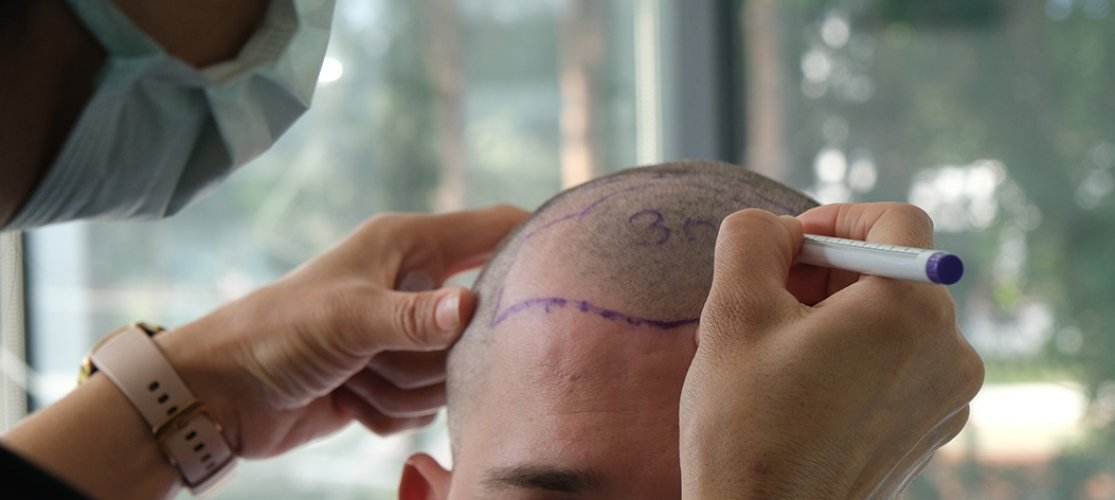
Technology is advancing rapidly in the field of healthcare. This progress has brought about many alternative treatments in hair transplantation. Hair transplantation operations are now performed using much more advanced techniques. One of these is hair transplantation with the Fue method. The feature of FUE hair transplantation is that it is performed using a special sapphire-tipped tool (pen).
Nowadays, hair transplantation operation is quite developed. One of these developing techniques is hair transplantation performed with Safir Fue. Fue hair transplantation, which is performed with a sapphire-tipped medical instrument (pen), enables the opening of smaller micro channels by using a sapphire tip in the application of opening the channels. Therefore, the crusting that occurs after the operation is quite minimal. Therefore, the healing process in hair transplants using the sapphire fue technique is also faster.
If the person who will have a sedated hair transplant operation requests direct general anesthesia, it is a hair transplantation procedure performed by the anesthesiologist under sedation. Local anesthesia is applied to people who will undergo surgery by numbing only the head area. In both cases, no pain is felt. In addition, the patient experiences an extremely comfortable, painless hair transplantation treatment. In general, hair transplantation is not a painful procedure. However, patients' hesitation in this regard has brought about improved comfort in hair transplantation.
The patient is given local or sedation anesthesia, and the grafts are taken from the donor area with their roots using a tool called micro motor. The collected grafts are transplanted into the channels opened with a sapphire-tipped medical pen. The margin of error in hair transplantation using the Sapphire Fue technique is minimal. The transplantation angle, direction and density of the hair follicles are much more successful. Therefore, opening the channels with a sapphire-tipped medical pen is a situation that greatly affects the success of the hair transplantation application.
In general, in hair transplantation, healthy hair follicles taken from the donor area are transferred to the area to be transplanted. The procedure, performed under anesthesia, is taken from the donor area with a tool called a micromotor and transferred with the help of a sapphire-tipped medical pen. In this way, more hair follicles can be transplanted and zero errors can be made in adjusting the angle and direction of the transplanted hair grafts.
Using a sapphire tip in sapphire hair transplantation causes less damage to the skin. Therefore, the healing process occurs much faster. Pain and suffering are minimal in hair transplantation using sapphire tips. Therefore, there is almost no bleeding. Accordingly, the risk of infection in sapphire hair transplantation is quite low compared to other transplantations. In addition, all medical materials used in the sapphire technique are disposable and sterile. It can be opened and used individually. More natural and dense hair transplantation is achieved with the sapphire fue technique.
The sapphire-tipped medical tool used in hair transplantation is a very advanced tool for opening channels. Other grooving techniques used a flatter metal. However, the sapphire technique is revolutionary in hair transplantation. The sapphire tip of the medical pen causes less damage to the skin and tissue.
Hair transplantation is not a very long operation, especially when sapphire tip hair transplantation technique is used. Generally, the patient's decision stage affects the duration of hair transplantation. After deciding on hair transplantation, the doctor must decide whether the patient is suitable for hair transplantation or not during the first examination. In addition, the causes of hair loss are investigated and it is examined whether it is due to any other reason.
Because in order to get the desired successful result, hair loss should not continue after the hair transplantation procedure. It is important how healthy the hair taken from the donor area is. Thus, before the hair transplantation procedure, all examinations are performed and the hair transplantation operation is performed.
 3 days
 Transfer Services
 Accommodation Options
 Nurse / Assistant Support
 1 Year Follow Up
Treatments are planned individually. You need to share information about your treatment with us so that we can provide you with correct planning. In particular, your photographs, x-rays, tests and previous health information are necessary for us to help you. After your information reaches us, your health consultant will contact you as soon as possible.
Sapphire hair transplantation refers to the use of sapphire blades to create incisions for implanting hair follicles. These blades are known for their sharpness, smoothness, and precision, which can lead to better results.
The primary difference lies in the tools used for creating incisions. Sapphire blades are finer and more precise than traditional steel blades, allowing for smaller, more accurate incisions and potentially better healing and hair density.
Similar to other hair transplant techniques, the duration can vary based on the number of grafts but generally ranges from 6 to 8 hours.
Local anesthesia is used to minimize discomfort during the procedure. Most patients experience only mild discomfort during and after the procedure.
Initial hair growth can be seen in about 3 to 4 months, with full results typically visible after 12 to 18 months.
Most patients can resume normal activities within a few days. The full recovery process, including healing of the scalp and new hair growth, can take several months.
Yes, the precision of sapphire blades allows for more accurate implantation, which can result in a more natural-looking hairline and overall appearance.
Potential risks include infection, scarring, and temporary swelling or redness. However, the use of sapphire blades can reduce the risk of complications due to their smooth and precise nature.
Ideal candidates are individuals with sufficient donor hair and realistic expectations about the results. A consultation with a hair transplant specialist is necessary to determine eligibility.
Aftercare includes following the surgeon's instructions, which may involve avoiding certain activities, taking prescribed medications, and attending follow-up appointments to monitor progress.
It’s usually advised to avoid wearing a hat for the first few days after the procedure to prevent any pressure on the newly implanted grafts. Your surgeon will provide specific guidelines based on your case.